
If I had multiple lives, one of them would be as a botanist. I would spend hours every day identifying the flora that surrounds my world, whether it be my yard, where I worked, where I hiked, or the cemetery where I will finally rest—in other words, wherever I am.

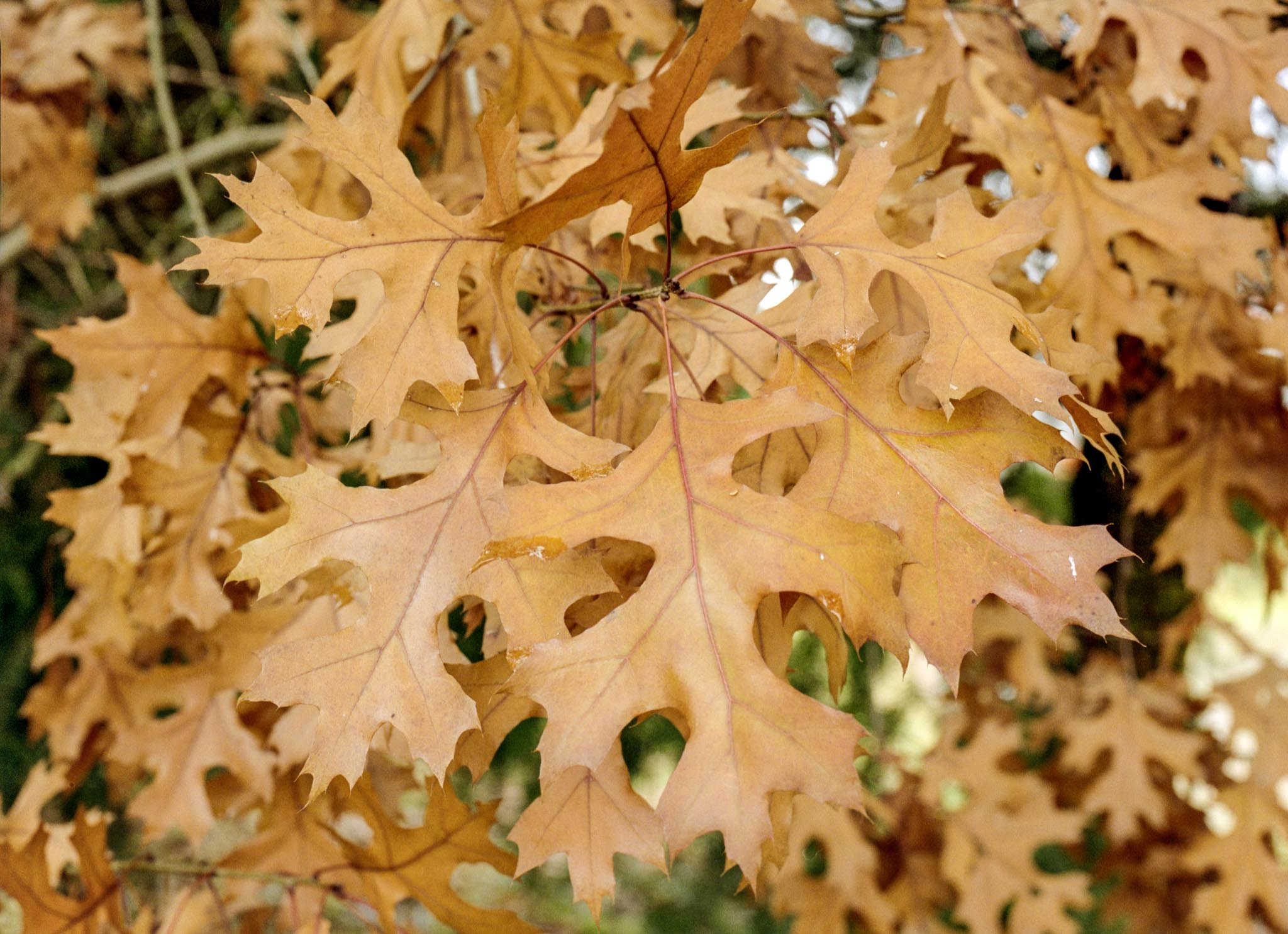
But I have only one life. My other interests take up the majority of my time. Once in a while, I stop to feed my botanical lusts. A couple of weeks ago, I was driving around the Olympia Airport and saw this row of oaks along the sidewalk. I returned the next day with my Pentax 645N to photograph what I saw and learn something about them.

They are an oak tree that is native to the northwest. They are called Garry Oaks, Oregon White Oak, or Oregon Oak. The Garry oak’s latin scientific name, Quercus garryana, was bestowed by Botanist David Douglas in the early 1800’s to honor of his friend, Nicholas Garry, an officer in the Hudson Bay Trading Company (https://ohgarryoaksociety.org/what-is-a-garry-oak/#:~:text=The%20Garry%20oak’s%20latin%20scientific,the%20Hudson%20Bay%20Trading%20Company.).
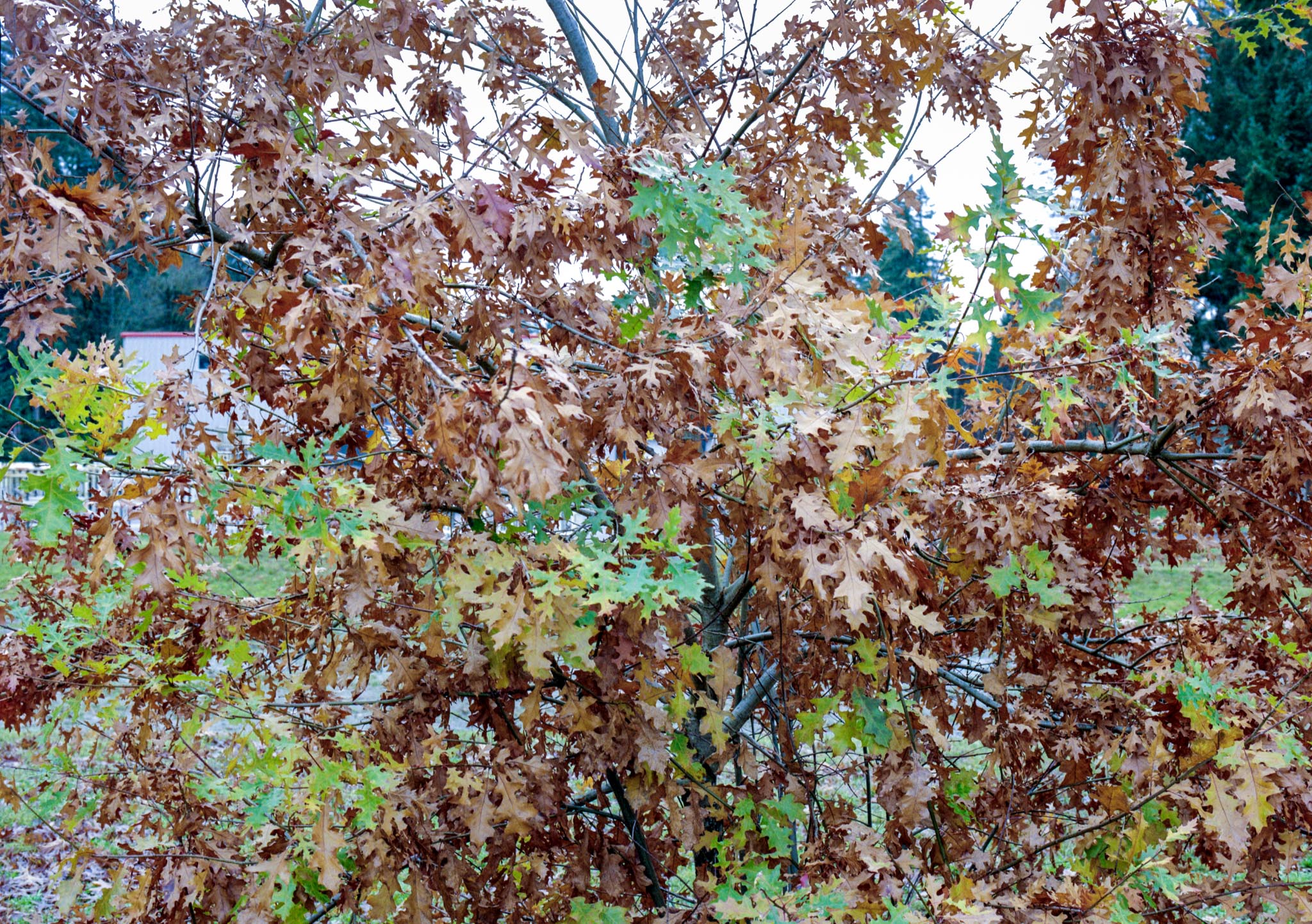
You can see in this image most of color changes that occur in the fall on one tree.
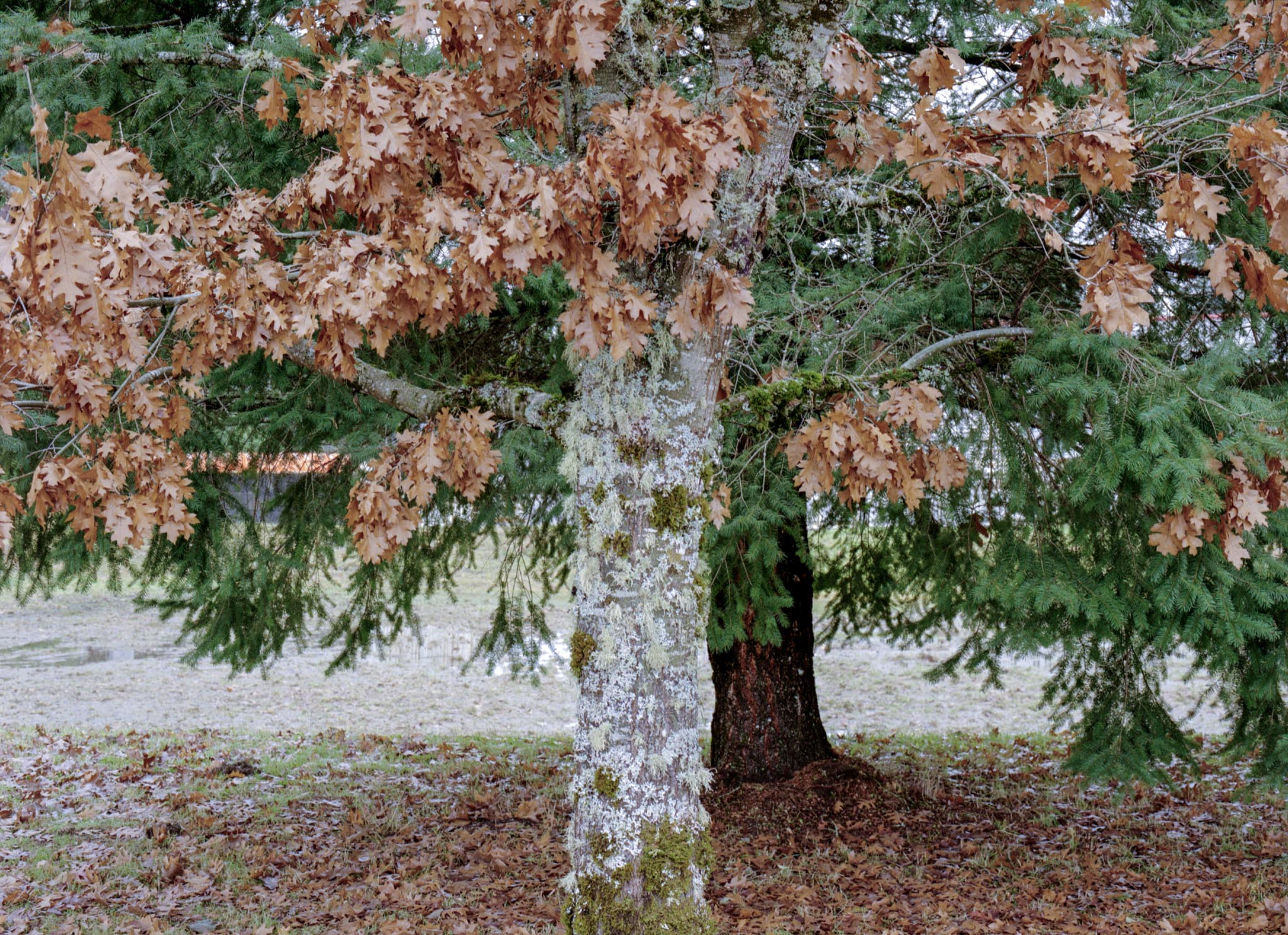
In the last stage, they are brown before they fall to the ground. But some trees will hold on to these leaves until spring (https://nhgardensolutions.wordpress.com/2011/11/12/why-those-oak-leaves-dont-fall/). Research is still inconclusive as to the reasons this occurs.


The leaves are lobed.
(of a leaf) having rounded or pointed parts that stick out from the central part: (https://dictionary.cambridge.org/us/dictionary/english/lobed)
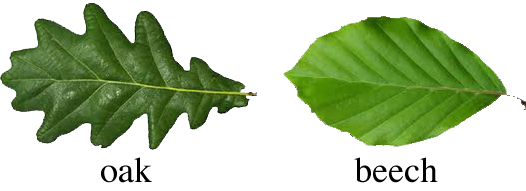
These two species should be subject to most of the same evolutionary pressures. Why would one evolve lobed leaves whilst the other has only tiny serrations? (https://biology.stackexchange.com/questions/906/why-do-some-plant-species-have-lobed-leaves-while-similar-species-in-the-same-h )
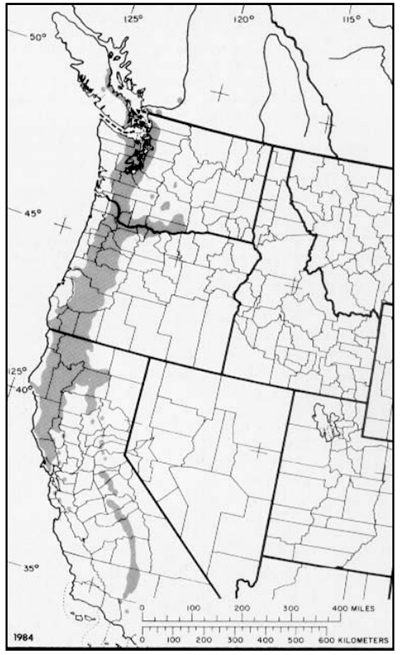
Garry oak range map from the US Forest Service

I developed the film with Cinestill C-41 Developer and scanned the negatives with the Epson V850 using VueScan. My interest in flora does create some issues. Whereas most hikers can cover 2-3 miles an hour, hiking through a forest inevitably takes me twice as long. I keep stopping to look at things. In other words, I usually hike alone.

 Steven Lawrence Pictures
Enjoyed the whole inclusions in this Steven. Your story, your photographs and the links provided. Photographs are so much admired because of your skills in producing them yourself through your developing skills. With all these considerations you have presented, and reading more about these oaks in your links, that is one special tree species. Much appreciated.
LikeLiked by 1 person